
Buying Land vs. an Existing Home in Central Florida: Which Costs Less?
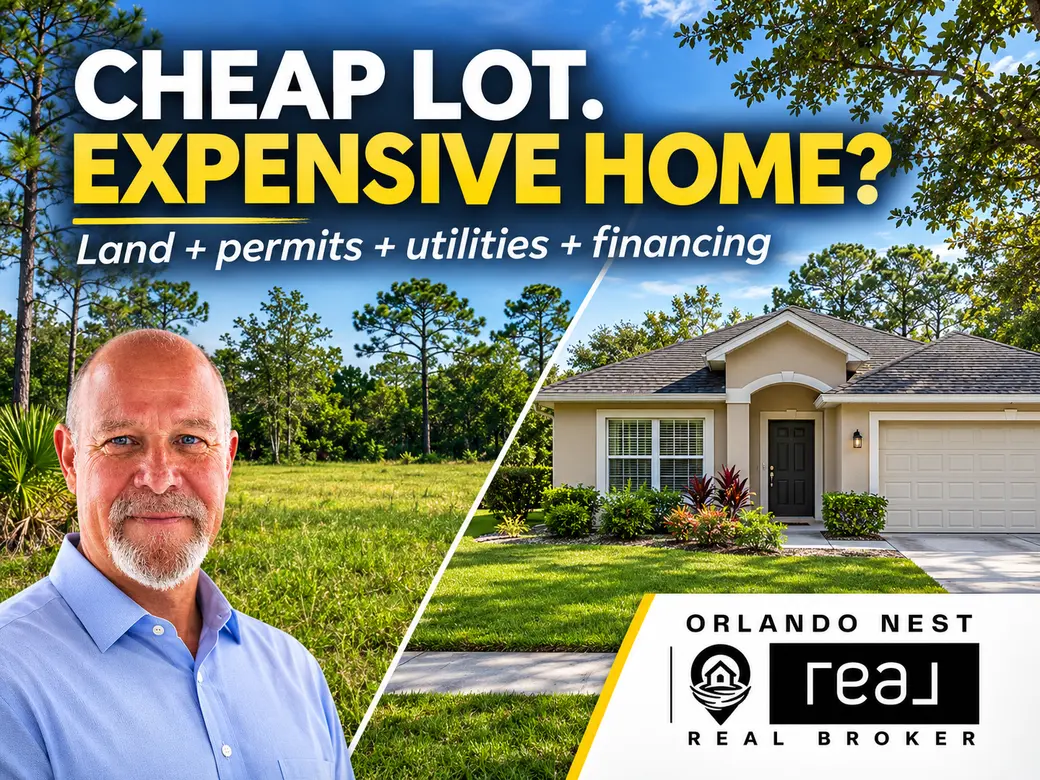
That Vacant Land You Want to Develop May Not Be All You Want It to Be.
Buying vacant land and building a home can cost less than purchasing an existing house, but that is far from guaranteed. Zoning restrictions, site work, utilities, construction costs, and financing can turn an inexpensive lot into a costly project. Even a manufactured home is not automatically a lower-cost way into homeownership.
The dream of buying land and building your own home
I get calls from people through Zillow who have found a vacant piece of land that looks like a bargain. Usually they are thinking about building a smaller home or placing a manufactured home on the property.
The reasoning is understandable: Why spend $350,000 or $400,000 on an existing home when you might purchase land for $50,000 or $75,000 and put a home on it for less? You might get more privacy, a bigger lot, and a place that fits your needs.
I get the appeal. Sometimes it really is a good idea. But the conversation changes when we move from the advertised lot price to the price of a finished, legally occupiable home.
The price of vacant land is not the price of the finished property. Before we even work through the budget, we have to ask whether the parcel will support the buyer’s plans.
First, can you actually build on the land?
A vacant parcel for sale is not automatically suitable for the home you want. Zoning, future land use, minimum lot size, setbacks, the parcel’s legal status, and development rules all matter. Requirements can differ between incorporated cities and unincorporated Orange or Seminole County.
A listing might call a parcel “residential” or “perfect for your dream home.” That is a marketing description, not a building permit. Verify proposed use and buildability with the local jurisdiction and, when needed, a surveyor, engineer, environmental professional, or builder.
Looking for room to spread out without starting from raw land? Compare homes with land in East Orlando and Chuluota as an existing-home alternative.
What about putting a manufactured home on the property?
Manufactured homes often enter these conversations because the advertised home price can be much lower than traditional site-built construction. But the home’s purchase price may not include delivery, installation, an approved foundation, utility connections, permits, driveways, or the work necessary to make the site ready for occupancy.
Legal eligibility matters too. Florida enacted Section 553.385 in 2026, with the applicable off-site housing zoning-parity provisions scheduled to take effect January 1, 2027. They provide broader zoning protections for qualifying off-site constructed single-family residences, including certain manufactured homes treated as real property. Uniform site, design, setback, and other generally applicable requirements can still apply. [1–2]
That is a meaningful change, but not permission to put any home on any lot. A buyer should verify the home’s classification and the jurisdiction’s requirements. And the new law will not pay to extend the power line or install a septic system.
The expenses that are not included in the land price
Suppose you find a lot for $60,000. What does that purchase price actually cover? It may be only the beginning of the budget.
- Boundary survey, site plan, and engineering
- Tree clearing, grading, drainage, and driveway or access work
- Electrical extension or connection
- Public water/sewer connections or well and septic installation
- Foundation, delivery, installation, and tie-downs where applicable
- Building permits, impact fees, and utility charges
- Construction-loan interest, closing costs, insurance, and contingency funds
Not every lot requires every expense. An improved residential lot with accessible utilities is very different from raw acreage. In Orange County, published impact-fee categories include single-family homes and mobile homes, although the charges on any given project depend on the development and jurisdiction. [7]
The cheaper the listing price, the more important it is to understand what still has to be done. Sometimes the cheap land is cheap for a reason.
Financing vacant land is not like financing an existing home
Here is another issue that has ended more than a few conversations I have had with land buyers: financing. Buyers who understand ordinary mortgage preapproval sometimes assume the same approval will finance an empty lot and a new home. It will not necessarily work that way.
A land-only purchase may require cash or a specialized loan
A significant number of the vacant parcels I encounter are marketed to cash buyers. That does not mean land financing is impossible. Some lenders offer land loans, but terms can differ from conventional existing-home mortgages, including lender-specific down payments, interest rates, loan duration, and restrictions based on access, utilities, and improvements.
A buyer with enough savings for the down payment on an existing house may still lack the cash required for a land purchase or the initial construction phase. Less expensive land does not automatically mean less cash needed.
Construction-to-permanent loans have a different approval process
A construction-to-permanent loan can combine interim construction financing and the later long-term mortgage, and some programs can include the land purchase. But the lender is reviewing a project, not an existing completed house.
Depending on the lender, the application may require approved plans, building specifications, a qualified contractor, the construction contract and budget, a timeline, and an appraisal of the expected completed home. Money is typically paid out in stages called draws as construction progresses, rather than all at once. [3–4, 6]
Some construction-to-permanent loans use one closing and convert under the agreed terms; others use two closings and separate permanent financing. Construction loans also generally have higher interest rates than long-term mortgages, according to the Consumer Financial Protection Bureau. Loan terms must be compared carefully. [3–4, 6]
Manufactured-home financing adds its own requirements
Eligible manufactured homes can qualify for certain construction-to-permanent arrangements. Fannie Mae guidance allows qualifying financing to include the home, land, site preparation, transportation, and installation, but not every structure, lot, or project meets the rules. Permanent attachment and real-property treatment can be important. [3, 5]
This is why I encourage buyers to talk with a lender who actually handles the kind of home and construction project they want, rather than assuming an ordinary mortgage preapproval covers it.
Do not buy the lot and hope the construction loan works later
Imagine paying cash for a $65,000 lot, then learning the lender cannot finance the proposed home, the project does not appraise at the needed completed value, or the buyer no longer has sufficient funds for the required contribution and reserves. Now the buyer owns land but cannot complete the original plan.
Before buying the land, investigate the entire financing path. Being preapproved to buy a $300,000 existing house does not mean you are approved to buy land and build a $300,000 house.
If a builder-developed home is also on your shortlist, read our guide to buying new construction in Orlando. For production-builder purchases, review how builder contracts differ from standard Florida resale contracts; those terms are not identical to a separate custom-build agreement.
Central Florida has another complication: what is under the land?
Wetlands, floodplains, drainage, and protected environmental areas can make an otherwise appealing lot difficult or expensive to develop. That is particularly important when examining rural or semi-rural parcels in East Orange County and Southeast Seminole County.
Seminole County notes that wetlands impacts may require state permits and that special rules apply in areas such as the Econlockhatchee River Protection Overlay. Its wetland map is approximate, not a substitute for site-specific determinations. [8–9]
Five acres of land do not necessarily mean five acres of usable building area. Investigate where a home, septic system, driveway, and other improvements can legally and practically go before assuming the parcel will work.
Eastern Seminole County provides a useful reminder that open land and unrestricted development are not the same. Read about the Black Hammock and Seminole County rural boundary.
What a cheap lot might actually cost
Consider a hypothetical buyer planning to install a manufactured home on a $65,000 parcel. An illustrative preliminary project budget could look like this:
| Expense | Illustrative cost |
|---|---|
| Vacant land purchase | $65,000 |
| Manufactured home | $125,000 |
| Delivery, foundation, installation | $25,000 |
| Clearing, grading, driveway | $20,000 |
| Well and septic | $25,000 |
| Electrical service | $12,000 |
| Survey, plans, permits, fees | $20,000 |
| Contingency reserve | $20,000 |
| TOTAL PROJECT | $312,000 |
These numbers are hypothetical, not typical Central Florida prices or contractor estimates. Costs vary by parcel and scope; items may overlap with a builder’s package. Financing interest and other carrying costs may add more.
That $65,000 lot is now part of a $312,000 project. If an existing home meeting the buyer’s needs is available for $300,000, it may be both less expensive and simpler to finance. On a different parcel, the math could favor building. Compare the finished project with actual existing-home choices—not the land listing against the house listing.
Seven questions to answer before buying vacant land
- Is it a legally buildable parcel? Verify zoning, future land use, lot status, setbacks, and restrictions with the appropriate jurisdiction.
- Is the particular home allowed? Confirm requirements for site-built or manufactured housing, including the forthcoming 2027 statutory change as applicable.
- What environmental or drainage restrictions apply? Investigate wetlands, flood zones, and usable building area.
- What utility infrastructure is available? Obtain estimates for power, water, sewer, well, and septic.
- What will it cost to prepare the site? Price clearing, grading, access, driveway, foundation, and drainage work.
- Can the entire project be financed? Ask an experienced lender about land ownership, down payment, reserves, builder approval, construction draws, appraised completed value, and permanent financing.
- What is the realistic all-in comparison? Add the land, home, infrastructure, fees, finance costs, and contingency, and compare with existing homes.
Whenever possible, handle these questions through an appropriately structured contractual due-diligence period before becoming obligated to close, using qualified professionals where needed.
When buying and building actually makes sense
I am not suggesting that buying land is a bad idea. A buyer may value acreage, privacy, a custom floor plan, or flexibility that an existing subdivision home does not provide. Those goals have real value even if new construction is not the least expensive option.
The right parcel, a realistic budget, and financing that fits the entire plan can make building worthwhile. The distinction is between choosing land for the lifestyle it makes possible and choosing it because you assume it is automatically the cheaper path.
Frequently asked questions
Is it cheaper to buy land and build a home in Central Florida?
Sometimes, but not necessarily. Compare the complete cost of land, site work, utilities, construction, fees, and financing with the price of a comparable existing home.
Can I finance vacant land with a regular mortgage?
Traditional mortgages used for existing homes generally do not finance vacant land by itself. Buyers may need cash, a specialized land loan, or an eligible construction-to-permanent loan that includes the land purchase.
Can a construction-to-permanent loan include land and a new house?
Some programs can finance the lot purchase and construction together. Requirements may include a qualified builder, construction plans and contract, a detailed budget, an as-completed appraisal, and appropriate cash reserves.
Can I put a manufactured home on any residential lot in Florida?
Not automatically. Florida’s zoning-parity provisions scheduled for January 1, 2027 protect qualifying off-site constructed homes, but legal buildability, applicable site rules, installation, and property classification still matter.
What if I buy the land and cannot qualify for construction financing?
You may own a parcel you cannot develop as planned. Financing the entire project should be investigated before you purchase the land.
How do I know if a vacant lot is buildable?
Start with the parcel number and the local planning and zoning authority, then verify legal access, environmental constraints, utility service, and feasibility with qualified professionals when needed.
My advice: know what you are buying before you buy it
I understand why people look for alternatives to purchasing an existing home. Housing is expensive, and seeking an affordable route to homeownership makes sense. But the advertised price of a lot can set expectations that do not match the realities of development.
Sometimes the challenge is zoning. Sometimes it is utility and site-preparation cost. Sometimes it is an environmental issue. And sometimes everything seems workable until the financing does not.
The goal should not be to find the cheapest piece of land. It should be to find the most practical and affordable way to achieve the homeownership outcome you want.
I am Ted Moseley, a Central Florida REALTOR® with Real Broker, LLC. Through Orlando Nest, I help buyers evaluate properties and make informed decisions, particularly across Orange and Seminole counties.
Thinking about buying vacant land in the Orlando area? Before you commit, let’s talk through your plan and the questions you need answered by local authorities, lenders, and construction professionals. Visit https://orlandonest.com/contact or call 321-321-2372.
Categories
- All Blogs 98
- College Park 1
- Doctor Lifestyle 12
- Downsizing & Rightsizing 1
- Dr. Phillips / Bay Hill 5
- Golf Communities 5
- Lake Nona 4
- Life Changes 7
- Offers & Negotiation 5
- Orlando Home Affordability 1
- Orlando Neighborhoods 33
- Real Estate Market Insights 3
- Relocation 28
- Seller Strategy 19
- Smart Home Buying 57
- Waterford Lakes & Avalon Park 6
- Winter Garden 4
Recent Posts


Have Questions About What You Just Read?