
Selling an Inherited or Trust-Owned Home in Orlando
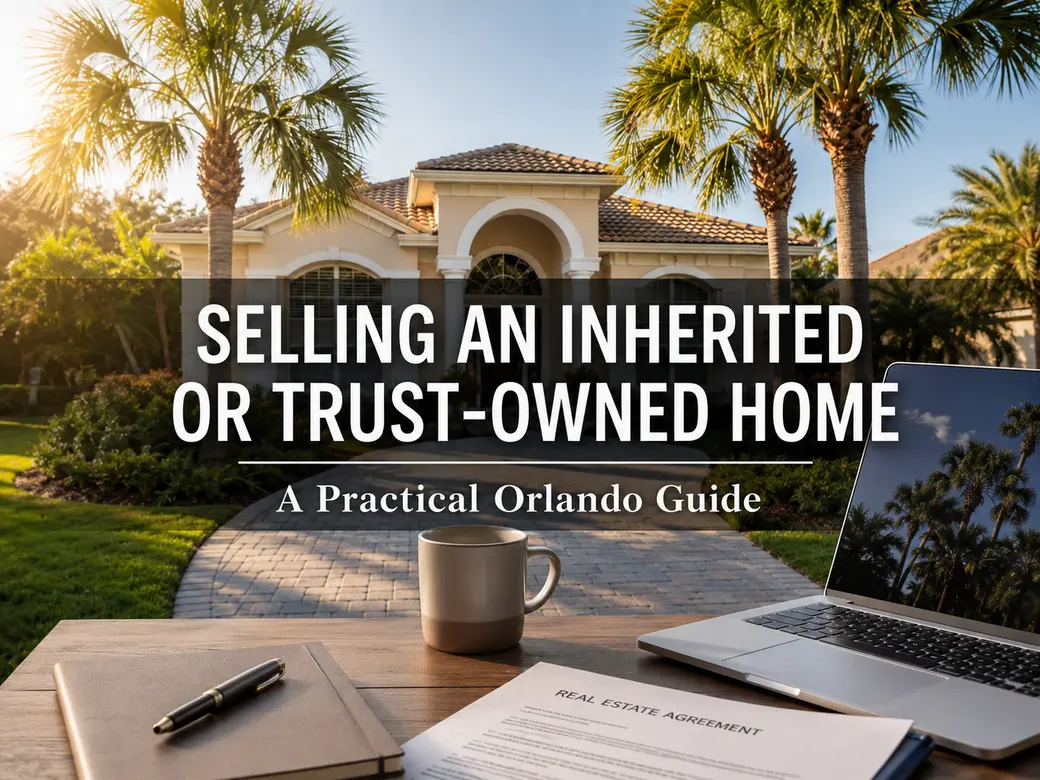
Selling an inherited or trust-owned home involves more than putting a sign in the yard. Someone must first confirm who has authority to sell, but the larger real estate job is evaluating the property, securing it, handling its contents, deciding what preparation makes financial sense, and managing the transaction through closing.
You can usually handle the sale even when you live outside Florida. The attorney and title company address ownership and legal authority. A knowledgeable Orlando real estate agent manages the property and helps the family make informed decisions about condition, pricing, marketing, offers, and logistics.
Quick Summary
Before preparing an inherited home for sale, have the appropriate Florida attorney and title company confirm who has authority to sign.
After that, the central questions are practical:
- What condition is the property in?
- Is it secure and properly insured?
- What should happen to the belongings?
- Should the family repair it or sell it as-is?
- What is it worth in its present condition?
- Who will coordinate vendors and property access?
- How will offers and net proceeds be compared?
- Can the entire sale be managed remotely?
This guide explains the real estate side of that process. It does not replace legal or tax advice.
Begin With Authority—Then Move to the Property
An heir, beneficiary, trustee, or family member may believe they have authority to sell, but the deed and estate documents control who can actually sign.
Depending on the circumstances, the seller may be:
- A trustee or successor trustee
- A court-appointed personal representative
- One or more people who inherited title
- A surviving co-owner
- Another party authorized through the estate or trust
Florida’s probate process is court-supervised, and a personal representative may sometimes need to sell real estate while administering an estate. The specific authority and procedure depend on the property, title, estate documents, court orders, and family circumstances. The Florida Bar’s consumer guide to probate provides a useful overview of the process.
A revocable trust may avoid probate for assets properly titled in the trust, but that does not mean every trust-owned sale is automatic. The attorney and title company may need to verify the acting trustee and the trustee’s authority. The Florida Bar also explains the general role of revocable trusts.
Stay in the Right Lane
The real estate agent’s responsibility is not to interpret the will or trust. It is to recognize when authority has not been established, bring the right professionals into the conversation, and avoid marketing or contracting the property under faulty assumptions.
The Real Estate Work Often Starts Before the Listing
A family does not necessarily need to wait until every estate matter is complete before evaluating the property and building a sale plan.
While the attorney addresses the legal process, the real estate work may include:
- Inspecting and photographing the home
- Checking whether it is occupied or vacant
- Confirming utilities and basic maintenance
- Evaluating visible condition issues
- Identifying immediate safety or security concerns
- Reviewing the likely buyer pool
- Estimating value in its current condition
- Comparing preparation and repair options
- Building a realistic timeline
- Identifying vendors who may be needed
This early planning can prevent lost time later. It can also help the attorney, trustee, personal representative, or beneficiaries understand what the property requires before money is spent.
Secure the Home First
A vacant inherited home needs attention quickly.
The family or authorized representative should determine:
- Who has keys and access codes
- Whether exterior doors and windows are secure
- Whether the alarm system is active
- Whether utilities are operating
- Whether the lawn and pool are being maintained
- Whether mail is accumulating
- Whether there are leaks, pest issues, or storm damage
- Whether vehicles or equipment remain on the property
- Whether the insurance company knows the home is vacant
Homeowners insurance written for an occupied property may not provide the same coverage after a home becomes vacant. The appropriate representative should contact the insurance provider and receive guidance specific to the policy.
The real estate agent can observe and report property conditions, coordinate approved access, and help arrange local services. Insurance advice, however, belongs with a licensed insurance professional.
Document the Property’s Condition
Out-of-state families should not be expected to make decisions based on “the house looks fine.”
A useful initial property review may include:
- Extensive photographs
- A narrated video walkthrough
- Exterior and roof observations from accessible areas
- Visible signs of water intrusion
- HVAC age and apparent condition
- Electrical-panel and plumbing observations
- Flooring, paint, cabinetry, and appliance condition
- Pool and landscaping condition
- Evidence of deferred maintenance
- Obvious safety concerns
- Personal property remaining in the home
This is not the same as a professional home inspection. It is an initial real estate assessment that helps the family understand what it owns and what decisions may be ahead.
A formal inspection may later be appropriate, particularly when the condition is unclear or repair decisions require better information.
Handle the Contents Deliberately
The contents of an inherited home can become more complicated than the real estate.
Before hiring a cleanout company or ordering a dumpster, the appropriate family member or fiduciary should identify:
- Items specifically distributed under a will or trust
- Family photographs and keepsakes
- Financial and legal records
- Jewelry, artwork, coins, and collections
- Firearms and ammunition
- Prescription medication
- Computers and devices containing personal information
- Vehicles, boats, and trailers
- Property that may require an appraisal
- Items family members want shipped
- Items suitable for an estate sale or donation
The agent can help locate estate-sale companies, movers, cleanout crews, donation resources, and other vendors. The agent should not decide who owns an item or authorize its disposal without direction from the legally responsible party.
Local Coordination Matters
Families living hundreds or thousands of miles away need photographs, written scopes of work, estimates, and confirmation that approved work was completed. A dependable local point of contact can keep small property problems from becoming expensive ones.
Decide Whether to Repair or Sell As-Is
“As-is” does not mean “do nothing,” and preparing a home does not necessarily mean renovating it.
Most inherited-property strategies fall into one of four categories.
1. Sell in Its Current Condition
This may be appropriate when the property needs substantial work, the estate has limited cash, or the family prioritizes speed and simplicity.
The likely buyer pool may be smaller, and offers may reflect the cost and risk buyers are accepting.
2. Clean Out and Stabilize the Property
Removing unwanted contents, cleaning, maintaining the yard, correcting safety issues, and stopping active deterioration can materially improve marketability without launching a renovation.
This is often the most practical middle ground.
3. Complete Selective Repairs
Some repairs may produce a reasonable return by reducing buyer fear or expanding financing options.
Possible examples include:
- Correcting active leaks
- Repairing damaged drywall
- Addressing unsafe electrical conditions
- Servicing major systems
- Replacing heavily damaged flooring
- Completing basic interior paint
- Improving curb appeal
- Handling obvious deferred maintenance
The question is not whether the repair makes the home nicer. The question is whether it is likely to improve the seller’s net result enough to justify its cost, time, and risk.
4. Renovate Before Selling
A larger renovation occasionally makes sense, but it should not be the default recommendation.
Renovations create:
- Upfront costs
- Contractor and permitting risk
- Timeline uncertainty
- Design decisions
- Additional carrying costs
- The possibility of over-improving for the neighborhood
A family already managing an estate may not benefit from becoming a long-distance renovation company by accident.
| Strategy | Upfront Cost | Likely Buyer Pool | Main Tradeoff |
|---|---|---|---|
| Sell in current condition | Low | Investors and project buyers | Faster preparation, but potentially lower offers |
| Clean and stabilize | Low to moderate | Broader buyer pool | Improves presentation without major renovation |
| Selective repairs | Moderate | Owner-occupants and investors | Can improve financing and buyer confidence |
| Full renovation | High | Retail buyers | Highest cost, delay, and execution risk |
Compare Net Proceeds, Not Just Sale Prices
An investor may offer a quick cash closing with few conditions. An owner-occupant may offer more but require inspections, financing, appraisal, repairs, or seller concessions.
The best offer is not automatically the one with the highest price.
A useful comparison should consider:
- Purchase price
- Requested closing-cost assistance
- Repair requests
- Financing and appraisal risk
- Inspection rights
- Deposit amount
- Closing timeline
- Personal-property expectations
- Seller-paid costs
- Probability of closing
- Ongoing carrying expenses
- The cost of additional preparation
The family should understand the estimated net result and transaction risk of each option.
That is a central part of the agent’s job: translating offers into understandable choices rather than forwarding PDFs and asking, “Which one do you like?”
Price the Property for Its Actual Condition
Inherited homes are sometimes priced according to family memories, an automated online estimate, a neighbor’s opinion, or what the house might be worth after a renovation that has not occurred.
Buyers price the property they can purchase today.
A condition-adjusted market analysis should consider:
- Recent comparable sales
- Current competing listings
- Property condition
- Renovation level
- Lot and location
- Functional obsolescence
- Likely insurance concerns
- Buyer financing limitations
- Current supply and demand
- The cost buyers may assign to uncertainty
The objective is not to discount the home merely because it was inherited. It is to position it accurately so qualified buyers compete for it.
An inherited home can still receive professional photography, thoughtful marketing, strong offer management, and careful negotiation. It should not be presented as distressed property unless it truly is distressed.
Ted’s Take
An inherited property is not automatically a bargain-bin listing. Sometimes the house needs substantial work. Sometimes it mainly needs cleaning, maintenance, and competent marketing. The first job is to determine which situation you actually have before the family spends money or accepts a discounted offer.
Selling From Outside Florida
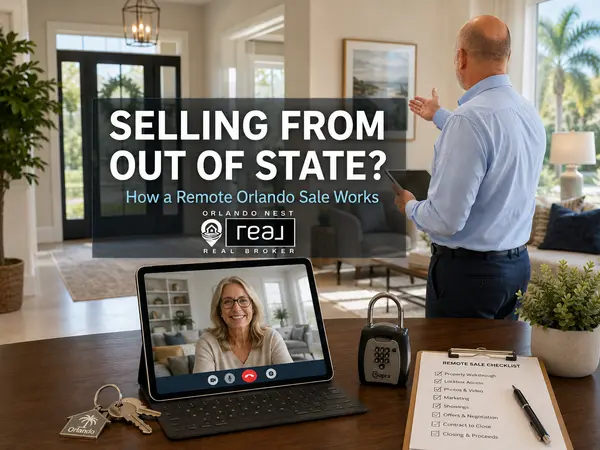
Most of the real estate transaction can be coordinated remotely.
Florida recognizes electronic signatures, and its statutes permit electronic and online notarization when applicable requirements are met. Florida’s online-notarization statutes provide the legal framework, but the title company should confirm which documents and procedures apply to the specific closing.
Remote sellers may be able to handle:
- Listing documents
- Vendor approvals
- Offers and counteroffers
- Inspection responses
- Title forms
- Closing documents
- Notarization
- Delivery of proceeds
The title company should confirm its exact signing and notarization procedures early. Not every document or circumstance is handled identically.
The property itself still requires local oversight. A remote-friendly sale process should include:
- Photo and video reporting
- Written vendor estimates
- Approval procedures
- Showing coordination
- Inspection access
- Repair verification
- Regular status reports
- Closing-readiness checks
The Technology Is the Easy Part
Electronic signatures and remote meetings are useful, but they do not maintain the lawn, meet a contractor, check a leak, secure a door, or confirm that an approved cleanout was completed. The difficult part is making sure someone competent is paying attention to the house.
Build the Team Around the Transaction
An inherited-property sale may involve several professionals with distinct responsibilities.
Probate or Trust Attorney
The attorney advises the estate, trustee, personal representative, or beneficiaries concerning authority, probate, trust administration, homestead, court requirements, and legal disputes.
Title Company or Closing Attorney
The title professional examines title, identifies ownership and lien issues, confirms required documents, prepares closing paperwork, and handles settlement.
Tax Professional
A CPA, enrolled agent, or tax attorney advises on basis, capital gains, estate or trust tax returns, and distribution-related tax issues.
IRS guidance states that the basis of inherited property is generally tied to fair market value at the date of death, although elections, special rules, and other circumstances can change the calculation. More information is available in IRS Publication 551.
Real Estate Agent
The agent evaluates and markets the property, builds the preparation strategy, coordinates approved vendors, manages buyer access, presents offers, negotiates terms, and keeps the real estate timeline aligned with the attorney and title company.
The agent does not replace the other professionals. The agent makes their work actionable at the property and within the transaction.
A Practical Orlando Sale Process
Step 1: Confirm the Point of Contact
Identify the person authorized to provide instructions and approve real estate decisions.
Step 2: Establish Professional Communication
Connect the real estate agent with the attorney and title company, with the client’s permission.
Step 3: Evaluate and Document the Property
Complete a walkthrough, take photographs and video, review condition, and identify immediate concerns.
Step 4: Secure and Stabilize the Home
Address access, utilities, insurance questions, lawn care, pool care, leaks, pests, and other problems that could worsen.
Step 5: Create the Contents Plan
Determine what will be retained, shipped, sold, donated, appraised, or removed.
Step 6: Compare Sale Strategies
Estimate likely pricing, expenses, timelines, and net proceeds for an as-is sale, limited preparation, selective repairs, or renovation.
Step 7: Prepare and Market the Property
Complete the approved work and present the home to the most appropriate buyer pool.
Step 8: Compare Offers as Complete Packages
Evaluate price, costs, conditions, financing, timing, and probability of closing.
Step 9: Coordinate Inspections, Title, and Closing
Keep the buyer’s contractual timeline aligned with the estate or trust requirements.
Step 10: Close Remotely or in Person
Follow the title company’s instructions for signing, identity verification, funds, and proceeds.
Common Mistakes to Avoid
Spending Money Before Establishing a Strategy
Do not approve a renovation merely because the home looks dated. Determine what the market will reward first.
Emptying the Home Too Quickly
Important documents, valuables, and specifically distributed property may be lost when a cleanout begins without a plan.
Letting Maintenance Stop
Vacant homes do not politely pause deterioration while the family sorts things out.
Relying Only on an Investor’s Valuation
A direct cash offer may be appropriate, but it should be compared with the property’s realistic open-market value and estimated net proceeds.
Hiring Vendors Without Clear Authority
Confirm who can approve work and pay invoices before making commitments.
Pricing From an Automated Estimate
Automated valuations may not account adequately for condition, renovation level, occupancy, title complications, or the property’s actual competitive position.
Waiting Until a Contract to Begin Title Review
Early title involvement can reveal authority, lien, deed, or documentation issues before they threaten a closing.
Frequently Asked Questions
```Can I sell an inherited Orlando home while living in another state?
Yes. Most listing, negotiation, title, and closing tasks can be handled remotely. The more important issue is having a reliable local plan for property access, maintenance, belongings, vendors, inspections, and showings.
Does Ted determine whether probate is required?
No. A qualified Florida attorney should determine whether probate is required and who has authority to act. Ted coordinates the real estate sale after the appropriate legal direction has been established.
Should an inherited home be sold as-is?
Sometimes, but “as-is” is a contract and property-strategy question—not an automatic rule. The family should compare the cost, risk, timeline, and likely net proceeds of selling in current condition against completing limited preparation or repairs.
Do we need to remove everything before listing?
Not necessarily. The appropriate strategy depends on the contents, condition, likely buyer, and family instructions. Valuable and specifically distributed property should be addressed before general cleanout work begins.
Can the house be evaluated before probate is complete?
Usually, an agent can inspect the property and provide market information before the entire legal process is complete, provided someone has lawful access and authority to authorize the evaluation. The attorney should advise whether and when listing or contracting the property is appropriate.
How long does an inherited-property sale take?
There is no responsible universal timeline. The real estate portion may move quickly once the property is ready and signing authority is established, but title, probate, condition, family decisions, repairs, and buyer financing can all affect the schedule.
Does Florida impose an estate tax?
Florida does not impose a separate estate tax on estates of people who died after December 31, 2004. Florida also says personal representatives generally have not been required to file Forms DR-312 or DR-313 since July 1, 2023. Federal and other tax issues should be reviewed with a qualified tax professional. The Florida Department of Revenue provides current estate-tax guidance.
A Knowledgeable Local Partner for the Real Estate Side
Attorneys handle legal authority. Tax professionals handle tax advice. Title professionals handle title and settlement.
Ted Moseley helps connect that work to the Orlando property itself.
That includes documenting the home, evaluating its condition, comparing preparation strategies, coordinating approved vendors, pricing it for the current market, presenting it professionally, managing offers, and keeping the sale moving when the decision-makers live elsewhere.
The first conversation does not need to begin with a promise to list. It begins with understanding the property, the people involved, and what must happen next.
Start With a Practical Property Review
If you are responsible for an inherited or trust-owned property in Orlando or Central Florida, Ted can help you understand its condition, likely market value, preparation options, and the real estate steps ahead.
This article provides general real estate information and is not legal, tax, insurance, or financial advice. Estate, trust, probate, homestead, ownership, and tax questions should be reviewed with appropriately qualified professionals.
Categories
Recent Posts




STAY UP TO DATE WITH THE MARKET