Interviewing a REALTOR® | Best Practices
What Are the Best Steps to Follow When Interviewing a REALTOR?
- Do your research: verify licenses, track record, and neighborhood experience.
- Ask targeted questions about strategy, pricing, and negotiation.
- Assess communication: response times, update cadence, and your preferred channels.
- Prioritize local expertise: schools, HOAs, micro-markets, and upcoming projects.
- Validate with testimonials and third-party data, not just promises.
Why interviewing your REALTOR matters in Orlando
Orlando’s pace of change rewards preparation. The metro gained population at one of the fastest rates among large U.S. regions in 2024, expanding about 2.7% year-over-year according to the Orlando Economic Partnership, based on U.S. Census Bureau metro estimates. Growth translates into more buyers, more competition, and more nuance at the neighborhood level—especially across Lake Nona, Baldwin Park, Winter Park, College Park, and east-side communities near UCF.
At the national level, affordability pressures and shifting inventory also shape strategy. The Harvard Joint Center for Housing Studies 2025 report notes homebuying fell to multi-decade lows amid elevated prices and rates, even as supply conditions improved in many metros. Mortgage costs are easy to track through the Federal Reserve’s FRED series for the 30-year fixed rate (MORTGAGE30US), a neutral benchmark to watch during your search.
Bottom line: in a fast-moving, data-rich market, interviewing agents is not a formality—it’s how you choose a strategist who can price precisely, negotiate effectively, and communicate clearly.
Step 1: Do your homework before the interview
Great interviews start with great prep. Confirm license status, scan recent listings and sales, and look for patterns: neighborhoods served, price bands, days on market, and negotiation outcomes. If you’re buying into high-demand pockets—say, Laureate Park or Eagle Creek in Lake Nona—ask for specific examples of wins in those micromarkets.
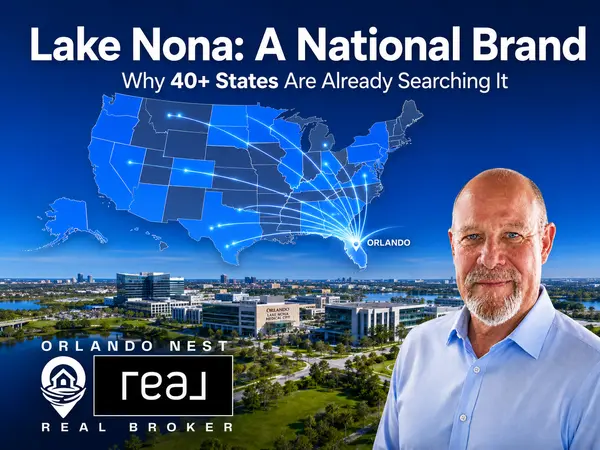
Lake Nona
Master-planned community anchored by Medical City; strong mix of single-family, townhomes, and newer construction with active HOA oversight.
Planning context: City of Orlando’s Southeast Sector Plan covers Lake Nona and Medical City. See the official documents: Southeast Sector Plan and the 2025 GMP draft updates (Growth Management Plan – Chapter 2 draft).
Baldwin Park
New Urbanist design with walkable village center, lakefront trails, and highly regarded school zoning—frequent demand from relocating families.
Step 2: Ask focused, revealing questions
Use the interview to evaluate approach—not just personality. Here is a high-signal set that separates top performers:
Experience & results
- “Show me a recent deal in my target neighborhood.” Ask for address-level examples (with client privacy respected). Dig into pricing logic, days on market, and negotiation steps taken.
- “What’s your strategy when a home sits?” Look for a cadence: re-market plan, fresh media, pricing pivot tied to comps and rate moves (FRED: 30-yr mortgage rate), and buyer feedback loops.
Market intelligence
- “Which data sources guide your strategy?” Expect neutral, authoritative references—e.g., Harvard JCHS for national context, U.S. Census Bureau for migration/population, and City/County pages for local projects (City Projects map).
- “How do you translate national trends locally?” For example, JCHS documents improved inventory in many metros, yet affordability remained tight in 2025. What does that mean around Lake Nona versus Winter Park? (source)
Pricing & negotiation
- “Show me your pricing playbook.” You want comp sets, adjustment notes, pending vs. closed logic, and contingency planning if showings lag benchmarks.
- “Walk me through your negotiation sequence.” Ask how they handle inspection credits, appraisal gaps, rate buydowns, and multiple-offer timing.
Marketing execution
- “What’s your media kit, and what’s new in the first 14 days?” Pro photography, vertical video, mobile-first copy, and listing syndication should be standard. Expect an open house plan that’s targeted, not generic.
- “How do you adjust marketing as data comes in?” You’re looking for weekly KPI reviews, retargeting tweaks, and buyer-agent feedback integration.
Step 3: Evaluate communication with a live test
Communication is the multiplier. Use your outreach to test response times and clarity.
- Cadence: Will you get a weekly summary plus immediate alerts? In fast-moving pockets (new listings near Medical City, for instance), a 24-hour delay can be costly.
- Channels: Align on phone/text/email/video. If you prefer text for quick updates and email for summaries, say so—and make sure their workflow fits.
- Decision support: Ask for examples of how they explained rate changes using neutral sources like the FRED 30-year mortgage index instead of generic talking points.
Step 4: Prioritize local expertise (schools, HOAs, and future projects)
Local insight wins close calls. A strong advisor will understand school boundaries, HOA rules, and the implications of new infrastructure. For southeast Orlando, review planning materials tied to Lake Nona and Medical City in the Southeast Sector Plan and growth management updates (GMP Chapter 2 draft). These documents preview how future roads, parks, and employment nodes shape value over time.
Avalon Park
Master-planned, east-side, with town center and active events calendar—popular with buyers seeking suburban vibe plus amenities.
College Park
Charming bungalows near Downtown; strong walkability and boutique retail along Edgewater Drive; frequent demand among professionals.
Tip: Ask how the agent stays current. You’re listening for specific, neutral sources—OEP economic briefs, Census metro updates, and JCHS housing research—not guesses.
Step 5: Weigh testimonials and real proof of performance
Testimonials should demonstrate problem-solving (inspection issues, title complexities), communication under pressure, and tailored strategy. Cross-check public data points (DOM trends, list-to-sale ratios in your micro-market) and ask for a plan B if the first 10–14 days underperform. A seasoned advisor will tie pivots to demand signals and macro context (e.g., mortgage rate moves per FRED), not hunches.
Interview checklist you can use today
- Confirm licensing, area focus, and recent transaction map for your neighborhoods.
- Ask for a pricing framework and an example adjustment table for a comp set.
- Review the 14-day marketing plan (assets, launch cadence, open houses).
- Align on update cadence and channels (weekly written summary + real-time alerts).
- Request references from similar transactions (size, location, complexity).
- Discuss pivots if showings/offers miss benchmarks (pricing, presentation, buyer incentives).
- Calibrate expectations using neutral sources: Census metro trends, Orlando population brief, JCHS 2025, and FRED mortgage rates.
FAQs
What does it typically cost to hire a REALTOR in Orlando?
Most residential listings involve a total commission in the 5–6% range, usually split between the listing and buyer’s agents. Exact structures vary by property, price, and services—discuss the full menu of services, marketing, and representation before you sign.
How long does it take to sell a home in Orlando?
Market-wide medians fluctuate by season and neighborhood. In 2025, many Orlando sub-markets experienced improving inventory (per JCHS 2025) while affordability remained tighter—so well-presented, well-priced homes in high-demand areas (Lake Nona, Baldwin Park, Winter Park) often move faster than the broader median.
Can my REALTOR help me evaluate market news objectively?
Yes—ask your agent to ground recommendations in neutral, high-authority sources, such as FRED mortgage indexes, Census metro trends, and Harvard JCHS research, then translate those signals to your street-level pricing and timing.
Talk with a local advisor
Ted Moseley – Real Broker, LLC
Phone: +1-321-321-2372
Email: ted@orlandonest.com
OrlandoNest.com
Categories
Recent Posts





STAY UP TO DATE WITH THE MARKET